
Arik Air Scandal: EFCC Witness Accuses Union Bank Over ‘bogus’ N71bn Debt
• EFCC director tells court: Foundation for takeover was ‘fraudulent, faulty’
• AMCON board resolutions admitted to challenge Kuru’s alleged unilateral role
• N76bn fraud trial deepens
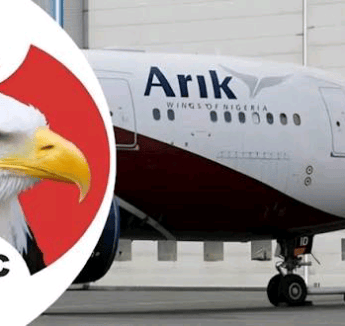
A major twist has emerged in the ongoing N76 billion fraud trial involving former Asset Management Corporation of Nigeria (AMCON) Managing Director, Ahmed Lawal Kuru, as a senior Economic and Financial Crimes Commission (EFCC) investigator told a Lagos court that the foundation upon which Arik Air was placed under receivership was allegedly fraudulent and faulty.
The EFCC’s Director of Lagos Zonal Directorate 2, Bawa Usman Kaltungo, who appeared as the fourth prosecution witness before Justice Mojisola Dada of the Special Offences Court in Ikeja, made the explosive claim while testifying about the investigation into the controversial takeover of the airline.

Kaltungo told the court that his investigation found that Arik Air was not indebted to Union Bank of Nigeria Plc, contrary to the circumstances presented in connection with the airline’s receivership.
«“The foundation for the appointment of a receivership over Arik Air was fraudulent and faulty. There was no bad debt; it does not exist,” the EFCC witness told the court.»
The statement adds a fresh layer to the long-running controversy over Arik Air’s takeover by AMCON and the handling of the airline’s alleged loan obligations.
According to Kaltungo, he headed the EFCC team that investigated a petition concerning the airline and subsequently informed AMCON’s top management at a meeting that Arik Air was not indebted to Union Bank and that the appointment of a receiver-manager was defective.
DEFENCE FIRES BACK
But the prosecution witness’s account was immediately challenged by the defence.
During cross-examination, counsel to Kuru, Uyi Giwa-Osagie, tendered AMCON board resolutions aimed at challenging the assertion that Kuru had acted unilaterally in approving the receivership.
The prosecution objected to the admission of the documents, arguing that they were irrelevant to the issues before the court.
Justice Mojisola Dada, however, admitted the documents, ruling that they emanated from AMCON’s board as a corporate body and had been duly certified in accordance with Section 104 of the Evidence Act.
The development gives Kuru’s defence documentary material with which to contest the EFCC witness’s account of how the decision to take control of Arik Air was made.
Giwa-Osagie argued that the documents were crucial to determining his client’s culpability, insisting that Kuru was not being prosecuted for the mere exercise of AMCON’s power to appoint a receiver-manager but for specific offences contained in the charge.
N71BN DEBT TRANSFER UNDER SCRUTINY

The trial centres on allegations surrounding Arik Air’s loan obligations, the transfer of its debt exposure to AMCON and subsequent transactions involving the airline’s assets.
One of the charges alleges that Union Bank made false statements to AMCON concerning Arik Air’s performing loans, resulting in the transfer of an alleged N71 billion exposure to AMCON.
Another count alleges that Kuru, Kamilu Alaba Omokide, former receiver-manager of Arik Air, and Captain Roy Ilegbodu, the airline’s CEO in receivership, fraudulently converted N4.9 billion belonging to Arik Air for the use of NG Eagle Limited.
The defendants have pleaded not guilty to all six counts bordering on conspiracy, stealing and abuse of office.
WHO REALLY APPROVED THE TAKEOVER?
At the heart of the courtroom battle is a critical question: Was Arik Air’s receivership the decision of Kuru alone, or was it an institutional decision of AMCON’s board?
While Kaltungo maintained that Kuru wielded extensive powers as AMCON’s managing director and chief executive officer and had sanctioned the appointment of the receiver-manager, the defence is now relying on the admitted board resolutions to challenge that narrative.
The court’s admission of the documents does not amount to a determination that the receivership was unlawful, nor does it establish the guilt or innocence of any defendant.
Rather, the documents could become significant as the court weighs competing accounts of the decision-making process surrounding Arik Air’s takeover.
AMCON, ARIK AIR AND THE RECEIVERSHIP CONTROVERSY
The EFCC case followed a petition by human rights lawyer Femi Falana, SAN, on behalf of Arik Air’s promoters and shareholders over the airline’s receivership and related transactions.
The defendants include Kuru; Omokide; Ilegbodu; Union Bank of Nigeria Plc; and Super Bravo Limited.
The case also raises broader questions over the exercise of AMCON’s statutory powers and the responsibilities of a receiver-manager placed in control of a distressed company.
Under Section 553(2) of the Companies and Allied Matters Act 2020, a receiver-manager is required to act in the company’s best interests, including preserving its assets and furthering its business objectives.
Whether the circumstances surrounding Arik Air’s receivership amounted to any breach of statutory duty or criminal conduct remains for the court to determine.
The defendants were arraigned on January 20, 2025, and all pleaded not guilty.
As proceedings continue, the explosive testimony that “there was no bad debt” and the admission of AMCON’s board resolutions have placed the circumstances surrounding Arik Air’s controversial receivership firmly back under the judicial spotlight.
Do You Need More Trending Updates? Then kindly bookmark our blog Realgosipcenter.com.ng, we will update you with more latest musics in mp3 audio format and video in mp4 formats as soon as they drop for quick downloads.
Discover more from DailyNewsCover – Nigeria Breaking News, Politics, Business, Entertainment & Sports
Subscribe to get the latest posts sent to your email.